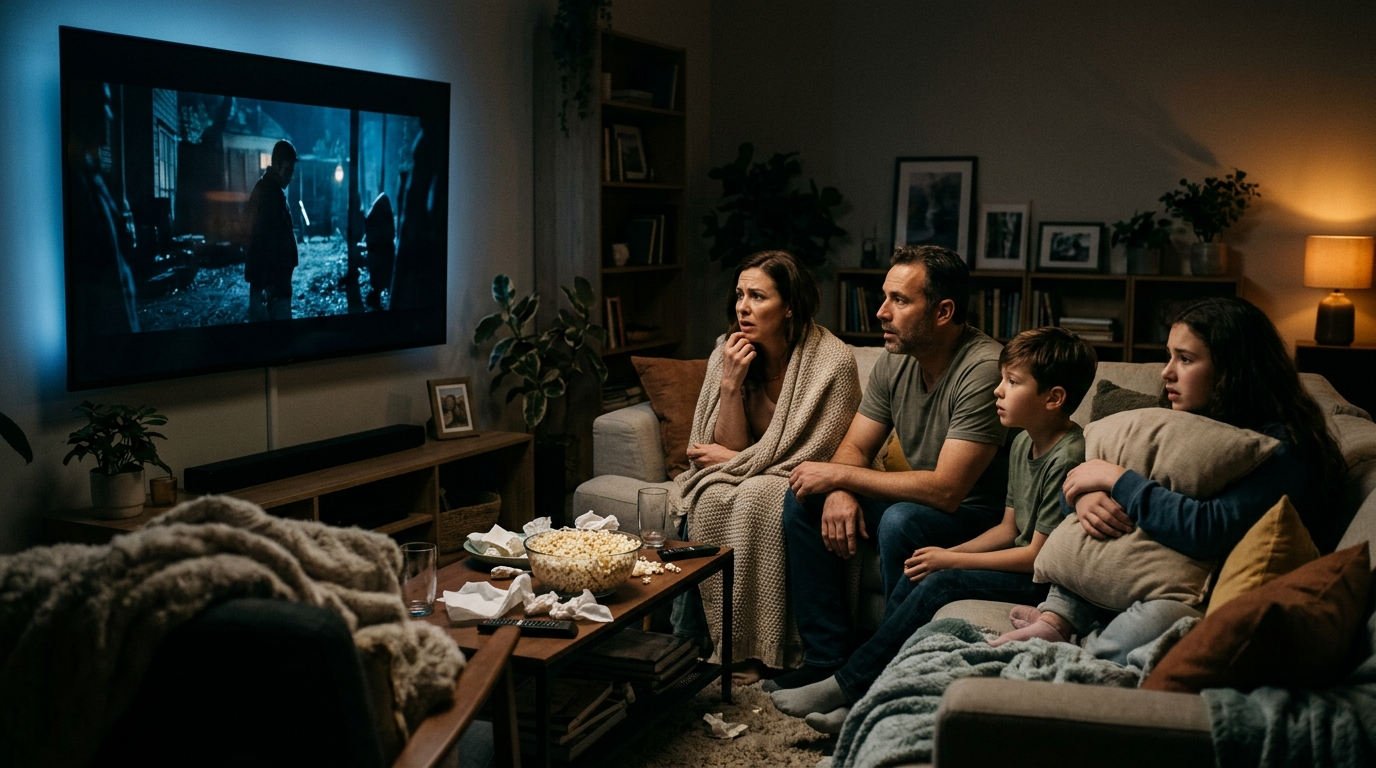
The most interesting new mystery and crime series are not necessarily the loudest. A good debut can begin with an overlooked witness, an inconsistent statement or a person whose ordinary life has become impossible to explain. The story's real attraction lies in how it turns uncertainty into character pressure. For viewers surveying 2026 debuts, that is a better measure of promise than a promotional claim that a thriller is “the next big obsession.”
This article is a discovery guide, not an invented list of unaudited premiere dates. Availability and titles change throughout the year, and “new for 2026” can mean a first broadcast in one country, a local streaming debut elsewhere or a genuine worldwide premiere. Use the framework below to find fresh investigations without mistaking a platform catalog addition for a new production.
Begin with the type of mystery you enjoy
A closed-circle whodunit asks who committed a specific act among a limited group of suspects. A police procedural follows the work of investigation, often balancing method, institutions and character life. Psychological suspense asks whether a person's understanding of events is reliable. A conspiracy thriller may shift attention from one crime to the organizations that profit from secrecy. These forms overlap, but their underlying pleasures differ.
When reading a premise, identify the central question and the method by which the protagonist might answer it. “A detective investigates a disappearance” tells you very little. “A missing person's family offers mutually incompatible accounts while the investigator's authority is questioned” suggests a particular kind of pressure. That specificity is useful when you are deciding whether to commit to another serialized mystery.
A strong pilot earns its uncertainty
A debut does not need to explain every secret. In fact, too much certainty can flatten suspense. But it should establish why the mystery matters, what the protagonist can realistically do and which facts the audience is allowed to trust. A cliffhanger attached to strangers we do not yet care about is an advertisement for episode two, not automatically a satisfying first episode.
Look for concrete investigative behavior: asking a follow-up question, revisiting a location, doubting a convenient assumption or recognizing a witness's vulnerability. Even an eccentric or surreal mystery benefits from characters making intelligible choices. The pilot can leave you confused about the culprit while still making you feel oriented about the human stakes. That distinction separates intriguing ambiguity from weak exposition.
Watch for fair-play clues
In a fair mystery, viewers are given meaningful evidence that later developments can reinterpret. The camera may linger on an object, a character may avoid a particular phrase or an apparently minor timeline inconsistency may become important. The trick is not that every clue must be obvious. It is that the solution should feel connected to information the story actually offered rather than to an entirely new fact introduced at the last possible moment.
Pay attention to the difference between evidence and atmosphere. A dark hallway suggests danger but proves nothing. A timestamp contradicting a witness's account is a factual tension the plot can test. Good new crime series know when to distinguish these signals, even while using sound and lighting to manipulate audience expectations. This discipline makes rewatching satisfying rather than merely revealing how little the first viewing could possibly have known.
The investigator should have something to lose
A procedural becomes more memorable when pursuing the truth imposes costs beyond temporary exhaustion. An investigator may compromise trust, challenge a superior, confront a personal bias or discover that lawful action does not always produce a just outcome. These conflicts give emotional weight to research, interviews and apparently mundane administrative obstacles. They also prevent a character from functioning simply as a machine for solving puzzles.
Be wary of crime dramas that replace complexity with a troubled-detective stereotype. A dark past, excessive drinking or a solitary apartment is not character development by itself. Ask whether the protagonist changes in response to evidence and whether colleagues or witnesses can challenge the hero's account. The most compelling investigators are not always the smartest people in the room; they are the people whose beliefs can be tested.
For how the broader genre calendar is shaping up, see the guide to upcoming fantasy series in the 2026 season.
Criminal organizations and institutions need texture
A series about corruption or organized crime can easily lapse into vague menace. “The system is rotten” is less revealing than a story showing the incentives and compromises that sustain a specific practice. Details of jurisdiction, class, money, internal rivalry and bureaucratic delay can create richer conflict than repeated displays of cruelty. Believable institutions have competing priorities, not only obedient henchmen and heroic outsiders.
When evaluating a new show, notice whether minor characters have reasons for their actions. A clerk protecting a job, an officer worried about procedure or a witness calculating personal risk can all complicate the investigation. These figures need not receive long subplots; a few precise scenes can establish a social world that exists beyond the main detective. Crime drama becomes more convincing when the consequences extend through that world.
Streaming labels can obscure a show's actual age
A platform may advertise a crime series as “new” because it has just joined the local catalog, despite having aired previously overseas. Conversely, a genuine first-season debut may be available in one market long before another. Check a reliable original-release date, not just the app's arrival banner. This is particularly important for international dramas and co-productions, where distribution rights move independently.
The distinction does not reduce a series' value. An overlooked three-year-old thriller may be a better watch than a heavily promoted premiere. It simply helps readers understand what they are choosing and prevents inaccurate statements about a show's production or renewal prospects. If you want to join live discussion, confirm that the local release pace matches the community you follow.
What a debut mystery needs to earn your trust
A compelling crime drama does not have to disclose its solution early, but it should reveal the rules by which evidence will matter. Look for small signals during the first episode: whether the investigator's limitations are acknowledged, whether the setting shapes the inquiry, and whether witnesses have motives beyond delivering convenient exposition. A mystery that simply withholds every relevant fact may be startling in the finale without making the journey satisfying. The audience should be allowed to think alongside the characters, even if they reach the wrong conclusion.
A promising series can also distinguish itself through the institution that surrounds the investigation. Police departments, newsrooms, families, legal offices and local communities each have different ways of controlling information. When the characters must navigate those pressures, the mystery becomes about more than identifying a suspect. A witness may hesitate because speaking threatens employment; an investigator may be constrained by a chain of command. Such obstacles are interesting when they follow understandable social or professional rules rather than appearing only to delay the plot.
Pay attention to the tone announced by a trailer. A dark color palette does not necessarily mean a psychologically complex show; violence is not a substitute for suspense. A procedural might promise the satisfaction of a new case every week, while a serialized thriller asks viewers to follow one case across a season. Both can work, but they create different contracts with the audience. Know which experience you want before treating an exciting thirty-second preview as sufficient evidence.
Finally, consider whether the characters have lives beyond their assigned investigative functions. A partner's disagreement, a family's divided loyalty or an investigator's flawed judgment can make weekly viewing rewarding even when the central clue arrives slowly. Those textures provide continuity between revelations. For an unfamiliar 2026 debut, the most useful early assessment asks not just “Is the case intriguing?” but “Would I still want to watch these people after the case changes?”
Sources and useful viewing resources
This is a guide to assessing unfamiliar crime dramas, not a verified census of 2026 premieres. The linked discovery pages can help identify candidates and check whether a show is actually available.