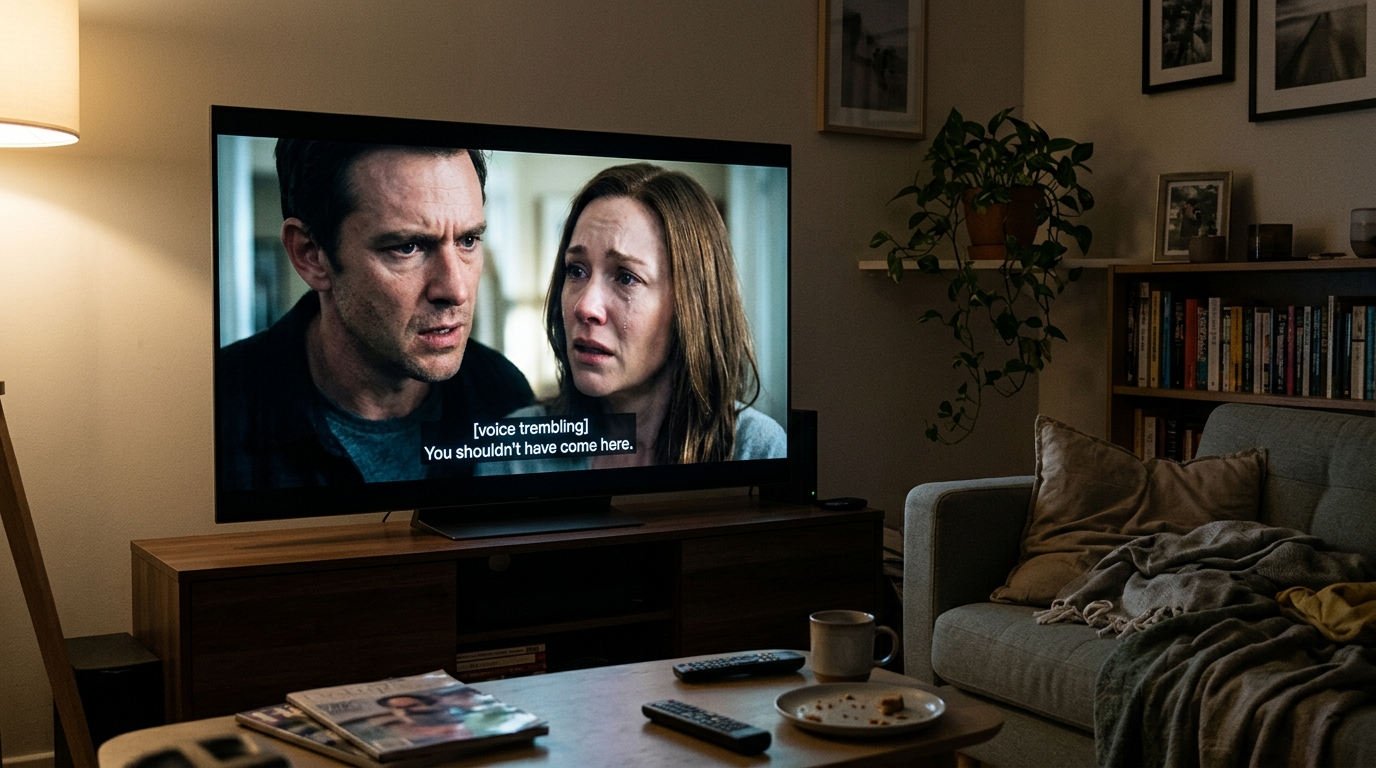
Slow-burn crime dramas trust the audience to notice small changes. A suspect revises one detail, an investigator waits through an uncomfortable silence, or a seemingly ordinary neighborhood begins to feel shaped by a hidden conflict. These stories are not necessarily less intense than fast thrillers. Their tension accumulates through character, atmosphere and the gradual narrowing of possibility rather than through a new chase every ten minutes.
If that kind of storytelling appeals to you, build your watchlist around specific qualities rather than a vague promise of darkness. An investigation can be patient and rigorous, or merely slow and repetitive. The difference lies in whether each episode gives the viewer a richer understanding of people and evidence.
For forensic patience: the procedural
A strong procedural makes investigative work meaningful. Interviews, documents, inconsistencies and professional disagreements reveal how a conclusion is reached. The main pleasure is following the movement from uncertainty to a defensible account. This does not mean the series must depict every piece of paperwork; it means shortcuts should not routinely replace the logic of the case.
Look for shows in which evidence changes the protagonist's mind. An investigator who is always correct may be superficially impressive but dramatically limited. A person forced to confront a mistaken assumption can reveal more about judgment and responsibility. If you enjoy the mechanics of investigation, choose programs whose cases advance through decisions rather than through repeated anonymous tips and miraculous technology.
For moral complexity: the compromised investigator
Some of the strongest crime dramas focus on the tension between professional duty and personal loyalty. A detective may be asked to investigate someone they know, a prosecutor may confront a case that is legally sound but ethically troubling, or a journalist may discover the cost of exposing a source. These conflicts turn the pursuit of truth into a test of character.
Be cautious about confusing gloom with depth. A protagonist's difficult past or abrasive manner does not automatically make the writing sophisticated. The question is whether their history changes the choices they make and whether the show allows other people to challenge them. A compelling antihero should encounter real consequences, not receive unlimited forgiveness simply because they occupy the center of the frame.
For atmospheric immersion: a place with secrets
A coastal town, industrial city or isolated community can become a character in its own right. The setting matters when geography and social relationships affect access to evidence. In a small community, everyone may know one another but refuse to speak openly. In a large city, class, professional networks and anonymity may shape the investigation differently. Place should influence causality, not merely provide attractive rain or fog.
Choose series that show ordinary life continuing around the crime. A family opens a shop, a workplace operates under pressure, or local authorities face competing demands. These details make the disruption more believable and preserve a human world beyond the central puzzle. When a setting is richly observed, a quiet street can become unsettling without the soundtrack insisting that something terrible must happen there.
For character-led tension: an unresolved relationship
A mystery can be compelling even when the crime itself is not especially elaborate. Perhaps the investigator and a witness share a history, a family refuses to trust one another, or a community's silence depends on an old obligation. Each new fact changes not only the case but the relationships surrounding it. This offers a different kind of momentum from conventional clue collection.
Look for subtext in conversations. Does a character answer the question asked or avoid the part that would cost them something? Does an apology resolve a conflict, or expose how little the participants agree about the past? Patient dialogue can generate pressure as effectively as action when viewers understand what a truthful answer would mean.
For how to find shows built around personal decisions, see our character-driven drama watchlist.
For structural intrigue: multiple perspectives
Stories with competing testimonies and nonlinear timelines can reward close attention. The audience may know something the investigator does not, or the same incident may look different when seen from another person's perspective. These structures are especially satisfying when a later revelation changes the meaning of an earlier choice without contradicting it.
They can also become exhausting if every episode exists only to conceal basic information. A good multiple-perspective drama provides emotional orientation even when chronology is uncertain. You may not know exactly what happened, but you should understand why a person fears disclosure. If you enjoy making notes or comparing theories, this kind of watchlist entry can be absorbing; if not, choose a more straightforward procedural.
For international discoveries: look beyond familiar formulas
Crime dramas from different countries can reveal how institutions, social norms and landscapes shape the pursuit of justice. Korean-language psychological thrillers, Nordic investigations and British police dramas often vary in tone and pacing, though no national tradition is uniform. Avoid treating a country label as a guarantee of quality or subject matter.
The most useful way to browse international work is by premise and character. Check original-language audio, subtitles and legal availability in your region. A strong localized setting can enrich the narrative because a moral dilemma plays out under specific social expectations. Watching beyond your usual market can broaden the kinds of investigators, victims and communities represented on your screen.
A watchlist designed for patient viewers
Keep three kinds of candidates: one procedural with clear investigative movement, one psychologically complex ensemble and one atmospheric international discovery. Record whether each is completed, episodic or still releasing. If you prefer to binge, consider waiting until a serialized season is fully available. If theory-making is part of the fun, a weekly format may suit you better.
Also check content intensity. A patient pace does not mean mild subject matter; some slow crime dramas contain disturbing violence or emotionally difficult themes. Respect your own limits and choose accordingly. The best selection is a show whose method of suspense feels compelling rather than merely admirable from a distance.
Crime dramas that reward patience
The examples emphasize slow-building investigation and characterization, with very different levels of violence and intensity.
| Series | What to expect | Consider before watching |
|---|---|---|
| Broadchurch | Community-centered mystery | Grief and investigation; serious themes |
| Mindhunter | Psychological procedural | Dialogue and interviews; dark subject matter |
| Mare of Easttown | Character-led murder mystery | Small-town relationships; mature themes |
| Slow Horses | Espionage thriller | Character conflict and understated humor |
Sources and useful viewing resources
The table provides established crime-drama examples, with content cautions; it is not a live streaming availability report. Use legal catalog tools to confirm access.