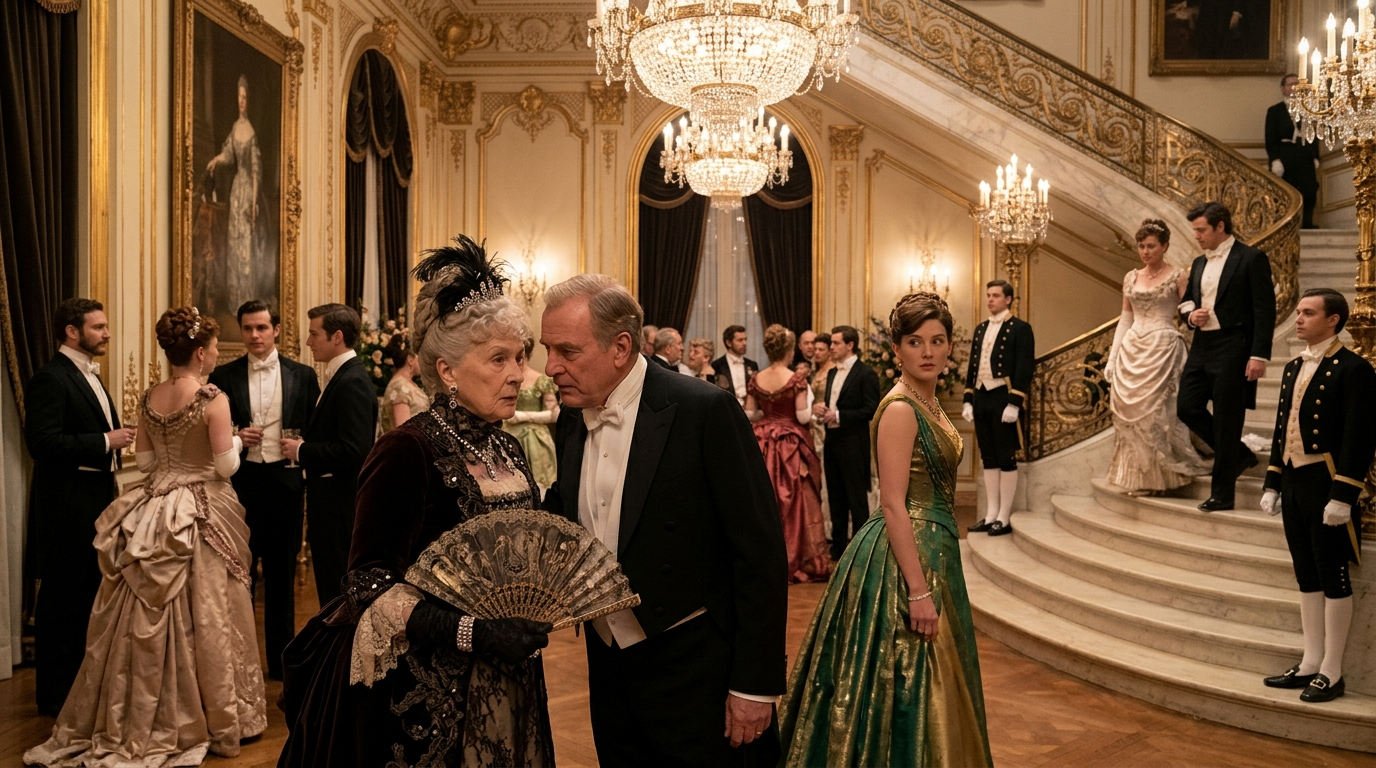
The fourth season of The Gilded Age opens on November 1, 2026, with the promise that a social victory is not the same thing as a peaceful home. HBO's announced setup finds Bertha Russell dealing with the cost of the position she has claimed, Agnes van Rhijn looking for room to regain influence, Marian pursuing a new direction and Peggy navigating an important change in her personal life. These are meaningful ingredients for a season about control, reputation and the distance between private happiness and public status.
This is a spoiler-aware premiere preview, not a claim to have screened an episode before release. The details here come from the confirmed season premise and the series' established concerns. The interesting question is not whether someone will attend another extravagant event. It is what each character must now sacrifice to keep the place they have fought to occupy.
The victory that has complicated Bertha's home
Bertha's rise has always been more than a personal ambition. She seeks recognition in a society whose rules were constructed to keep newcomers outside, yet each advance changes the demands placed on her family. The fourth season's official premise says her social accomplishment has come at a cost. That wording suggests a familiar but productive dramatic conflict: achieving one kind of power can threaten the relationships that made pursuing it possible.
The question for Bertha is whether she understands the difference between arranging outcomes and earning genuine loyalty. The show has made status feel almost physical, as if a seating plan or invitation could alter the temperature of an entire room. But family members are not items on a guest list. A compelling continuation would allow her strategic brilliance to remain visible while examining the limits of a strategy built around other people's lives.
Agnes sees an opportunity, but opportunity is not restoration
Agnes's authority has never depended solely on wealth or popularity. She possesses an intimate knowledge of social codes and a confidence born from having inhabited them for years. The new season's stated premise gives her a chance to reclaim position, which could create both comic friction and a sharper examination of what status means when the world is changing around her.
There is a difference between being proven right about someone's mistake and possessing the power to reverse it. Agnes may recognize an opening, but exploiting it could require compromising principles she regards as permanent. The appeal of her character lies partly in the tension between cutting judgment and complicated affection. A successful season would not reduce her to an opponent of modernity; it would allow her choices to expose what she fears losing.
Marian's future requires more than choosing sides
Marian has frequently occupied an uncomfortable middle ground between established society and the people who want to reshape it. An announced “new path” is interesting because a path requires sustained decisions, not simply one declaration of independence. Her place in the ensemble allows the drama to ask whether personal freedom can exist without a complete rejection of family obligation.
Look for scenes in which practical consequences matter. A career ambition, relationship or relocation becomes dramatically persuasive when it changes how Marian spends her days and whom she can trust. Easy speeches about self-determination would be less revealing than choices made under pressure from people she respects. Period drama becomes contemporary without anachronism when it shows recognizable emotional compromises within historically specific constraints.
Peggy's story must remain more than a social subplot
Peggy's work and relationships give The Gilded Age access to a different set of institutions and expectations from those confronting the Russell and van Rhijn households. The announced fourth-season premise describes her attempt to gain acceptance from future in-laws while remaining true to herself. This is not simply another version of the desire to join an exclusive drawing room; the social and personal pressures surrounding her are distinct.
The richest writing will give Peggy agency rather than treating her as a measuring instrument for another family's approval. How does she define belonging? What boundaries does she consider non-negotiable, and who is willing to respect them? The series is strongest when it lets characters navigate material and professional realities alongside romance, and when those realities shape what an apparently private choice can mean.
For how to assess a premiere without confusing setup with payoff, see our approach to judging a series beyond its opening episode.
The machinery of social conflict remains the show's signature
A formal dinner can function like a battlefield in The Gilded Age: positions are assigned, allegiances are tested and the smallest public gesture can carry a private message. These set pieces are entertaining partly because the dialogue rarely states every intention directly. The pleasure lies in interpreting what a character is permitted to say, what they choose not to say and who catches the difference.
For season four, the challenge is to make those rituals feel consequential rather than merely luxurious. Costume, production design and camera movement contribute to the social geography of the world. A new costume can suggest an attempt at reinvention; a door held open or shut can reveal a hierarchy. But visual splendor matters most when it supports conflict that continues after the guests have left.
A larger ensemble needs careful balance
With numerous interconnected households, the series can make New York society feel alive beyond its lead characters. It can also risk dispersing attention so widely that important emotional turns become abbreviated. The strongest episodes usually connect side stories to a clear central pressure: a new opportunity, an unsettled debt of loyalty or a relationship that cannot remain secret.
This season has a useful shared theme in the cost of getting what one wants. Bertha's position, Agnes's opening, Marian's independence and Peggy's acceptance could each explore that question differently. The key is not to force all characters into the same moral lesson. It is to let parallel stories illuminate one another while retaining the distinct social conditions under which each person acts.
What the first episode has to establish
A season premiere needs to reconnect viewers with emotional stakes while making the new central conflict legible. It does not have to introduce every cast member or resolve the consequences of the previous finale immediately. A precise scene showing Bertha and her family disagreeing about the cost of her ambitions could do more than a long recap of past victories. Similarly, a quiet exchange involving Agnes may indicate whether her opportunity is substantial or merely satisfying to imagine.
Because this preview is written at the start of November 1, there is no basis for attributing particular lines, scenes or outcomes to the unaired premiere. What can be judged fairly is the dramatic promise of the announced arrangement. The season offers clear tensions between recognition and intimacy, inheritance and change, autonomy and acceptance. Those tensions are strong material for this particular ensemble.
Publisher announcements and verification
HBO’s press release supplies the fourth-season storyline, episode count and November premiere date. Interpretations about relationships and conflict are a preview, not a report from a private screening.