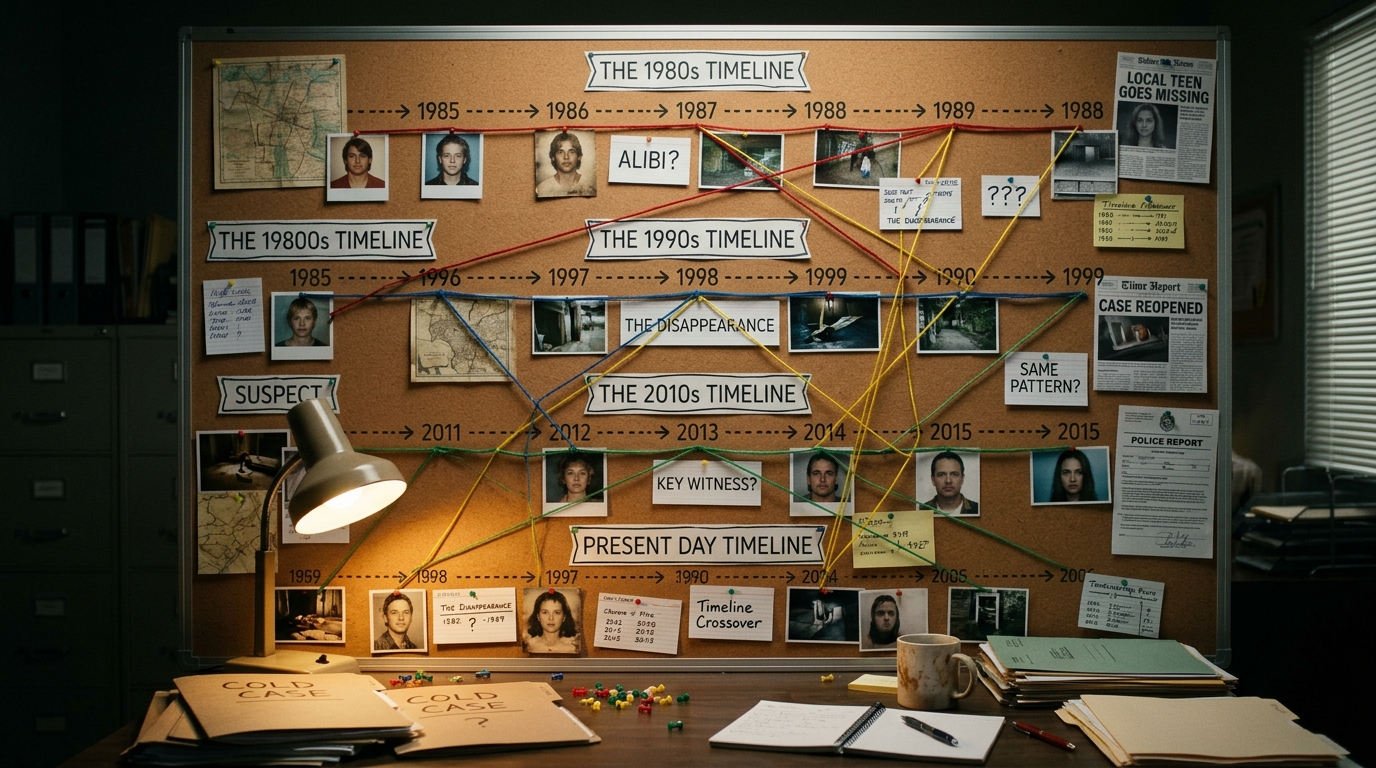
A good cliffhanger explanation should clarify the question an episode leaves open without answering it using information from later episodes. That sounds simple until an author begins writing. The most dramatic moment may contain a character's name, a location or an implied betrayal that fans who have watched ahead already understand differently. Careless phrasing can turn an innocent recap into a spoiler for readers following the series at their own pace.
The solution is to define a strict episode boundary and distinguish what viewers saw, what they can reasonably infer, and what remains unconfirmed. A helpful explanation reconstructs the stakes at the end of the episode. It does not borrow knowledge from the future to make the writer sound more authoritative.
Establish the exact spoiler boundary first
Before describing the ending, identify the season and last episode covered. A label such as “through season two, episode six” is more useful than “mostly spoiler-free.” It gives readers the information they need to decide whether to continue. Keep the same boundary in headings, captions and social descriptions, where unexpected plot details are particularly easy to encounter.
Do not append a later revelation as a casual aside. Even phrasing such as “this will become important” can change the audience's expectations by signaling what deserves attention. If the purpose is to explain one episode's unresolved moment, remain within what the episode itself established. Readers who want full-season analysis can choose a different article explicitly labeled for that scope.
Describe the situation before interpreting it
Start with the concrete action that ends the episode. A door opens, a witness changes their account or an ally refuses to answer a question. Then describe the immediate context: who is present, what they believe and which choice is now difficult. You do not need to repeat every scene leading to the moment. Select the information required to understand why the unresolved event matters.
This step prevents a common error: presenting a popular theory as an objective summary. “The ending proves the friend is guilty” may be unsupported, while “the friend gives an explanation that conflicts with earlier testimony” is a clear account of evidence. The second formulation leaves readers free to form their own judgments without losing the ability to follow the story.
Separate confirmed facts from possible meanings
Cliffhangers are often built to support several interpretations. An unexpected phone call might imply rescue, exposure or manipulation, depending on what the audience knows. State the confirmed element first, then consider plausible readings with careful language. “One possibility is” or “the scene invites the question” is more accurate than declaring an intended answer before the series has supplied it.
A useful interpretation should be anchored in an earlier event from the covered episode range. Point to the relevant promise, relationship or contradiction rather than relying on information from interviews or leaked materials. This protects the reader's experience while making the analysis substantive. It shows how the episode constructed suspense rather than simply listing theories.
Focus on the cost of not knowing
A cliffhanger works because uncertainty changes what characters can do next. A missing person's fate matters because someone must decide whether to keep searching; a surprising accusation matters because trust may collapse even before guilt is proven. Explaining those consequences gives readers a useful account without supplying an answer the story has intentionally withheld.
Ask what is at stake immediately. Will a character's authority be challenged? Has someone lost the ability to deny a secret? Does a decision have to be made before more evidence can arrive? The emotional and practical pressure often explains why the final image is compelling. A cliffhanger without consequence is merely a paused scene.
For how to get oriented before continuing an unfinished story, see our catch-up method before the next season.
Avoid spoiler-heavy descriptions in search results
A headline or excerpt can betray more than the body if it announces the identity of a person who appears unexpectedly at the end. Use neutral, descriptive wording that indicates the episode and nature of the question rather than the answer. For example, “What the last conversation changes” is safer than a headline naming the hidden participant and their supposed role in the plot.
The same principle applies to thumbnails, alt text and social preview cards. An image showing a late-season revelation can spoil viewers before they choose to open the story. Select imagery appropriate to the promised episode boundary. Accessible descriptions should be meaningful, but they should not needlessly disclose a surprise unrelated to the article's search intent.
A cliffhanger may be emotional rather than factual
Not every finale ends with a mystery about identity or survival. A character may confess something that alters a marriage, refuse a long-awaited opportunity or choose to walk away from a family. In such cases, the unresolved question concerns consequences: whether trust can be rebuilt, whether a new direction is viable or whether a relationship has changed beyond repair.
These endings deserve the same care as puzzle-based mysteries. Do not reduce them to a list of potential plot twists. Explain the history that makes the decision difficult, and acknowledge that the character may not know what happens next. Emotional uncertainty can be a deliberate artistic choice, not an omission waiting for an explanatory chart.
Make theories useful without ranking them as truth
Readers often arrive at an ending explanation because they want to compare their interpretation with others. Offer a small number of genuinely distinct possibilities, each tied to a detail already on screen. A theory that merely renames a character or introduces an unseen conspiracy contributes little. The best options reveal different thematic or causal readings of the same evidence.
Do not assign invented probabilities. Claiming a theory has an eighty-percent chance of being right usually creates false precision. Instead, identify supporting and conflicting clues. This encourages critical attention and makes it easier to revise an interpretation when the next episode supplies new information. A theory should be a tool for thinking, not a disguised spoiler.
Sources and useful viewing resources
Spoiler boundaries described here are reader guidance rather than an official industry standard. Use the viewing directory separately if you need to locate the relevant series in your market.