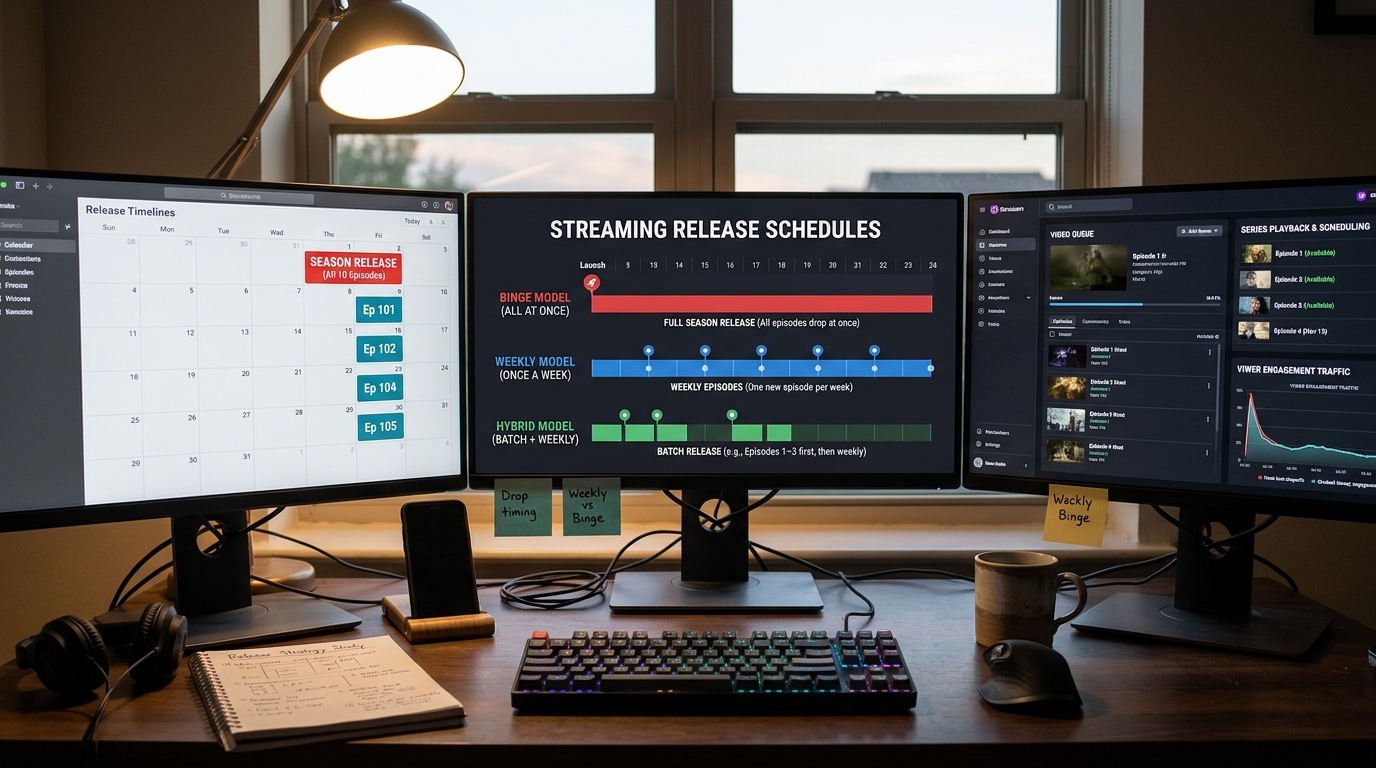
A series released one episode a week can feel like a shared appointment. A full-season drop can feel like receiving an entire novel and deciding how quickly to read it. Both methods change the experience, even when the episodes themselves are identical. The question is not which strategy is universally better but what each makes easier or harder for viewers, storytellers and communities.
There is also a middle ground. Some platforms divide a season into a few substantial batches, as Prime Video has announced for The Rings of Power season 3 in November 2026. That hybrid illustrates how release design can shape anticipation without fully controlling the viewer's pace.
What weekly episodes make possible
With an interval between installments, individual episodes have space to register. A difficult decision can be debated, an emotional loss can linger, and a clue can remain uncertain for seven days. For serialized mysteries, this rhythm helps transform audience speculation into part of the entertainment. For a comedy or relationship drama, a recurring appointment can provide familiarity during a busy week.
The advantage is not merely more time to talk online. A pause can change the emotional weight of a scene. A season cliffhanger watched immediately may function as a sharp transition, while the same moment followed by a week of waiting can become its own dramatic experience. Weekly storytelling can reward episode design in ways that rapid autoplay sometimes hides.
Why a full drop can strengthen immersion
A complete season gives viewers control over their own schedule. They can enjoy an episode each evening, save the story for a weekend or stop whenever attention fades. Closely connected timelines may be easier to follow when the viewer does not wait weeks between details. Dense fantasy worlds and intricate mysteries can benefit from this continuity, especially when the audience must remember names and subtle shifts in alliances.
The drawback is the temptation to watch beyond genuine interest. Autoplay can blur episodes together, and an intense drama may become emotionally exhausting if viewed without time to reflect. Full availability is not an instruction to binge. Choosing your own pauses is part of the freedom that the release model offers.
Spoilers create different kinds of pressure
Weekly launches establish a relatively clear frontier: people who have watched the latest episode and those who have not. Full-season releases create many frontiers at once, because one viewer may finish all eight episodes on Friday while another is still at episode two on Monday. Public discussion can reveal the ending before slower viewers have had a realistic opportunity to catch up.
The social solution is specific language. Label discussion by season and episode range, avoid revealing major turns in headlines, and give friends time to say what they have seen. No technological filter can completely replace courtesy. If you love live theory-making, weekly releases may feel friendlier. If you prefer private discovery, a full drop may still suit you better if you mute relevant feeds for a few days.
Writers can use the episode as a complete unit
Traditional weekly storytelling encourages installments to have their own movement: a question, development, emotional turn or partial resolution. That does not require formulaic plots. It does ask the viewer to feel that something meaningful happened this week. A show that continually postpones all payoff can become frustrating when every pause is imposed by the distributor.
A full-season series can lean more heavily on a single overarching arc, though it risks turning middle episodes into connective tissue. The strongest examples maintain satisfying local progress while contributing to the complete story. Distribution is not destiny, but it can reward or expose particular writing decisions. A cliffhanger feels less manipulative when the preceding hour has already earned its place.
For how to plan a rotation across multiple services, see our guide to managing watchlists across streaming apps.
The case for a split-season strategy
Batch releases divide a larger arc into acts. Prime Video's schedule for The Rings of Power season 3 places four episodes on November 11, two on November 18 and two on November 25. The opening group can establish a substantial movement, while the later intervals preserve discussion and anticipation. This can combine immersion with some of the weekly model's community benefits.
But a batch can create its own pressure: four episodes may be too much for one evening, and friends might assume everyone has completed the same block. A split release works best when the installment groups feel deliberately arranged rather than arbitrarily separated. Viewers can respond by defining personal stopping points instead of allowing the release schedule to make every decision.
Cost can influence your preferred pace
A weekly season may span more than one monthly billing cycle. A complete drop may be accessible during one short subscription period, particularly if you begin after the launch. For budget-conscious viewers, the difference can be meaningful. Waiting for a finale may reduce costs, though it also means postponing discussions and managing spoilers for longer.
Do not subscribe purely on the assumption that a show will release every episode at once. Verify the current plan and schedule in your region. A promotional headline announcing a premiere date is not necessarily an episode calendar. Also consider whether you will watch other titles during the subscription period. The lowest monthly cost is not always the best value if it forces you to rush through stories you wanted to savor.
Attention and memory have a rhythm of their own
Weekly viewing requires recalling earlier details, which can become part of the pleasure for people who like recaps and theory discussion. It can be difficult for viewers dealing with numerous simultaneous shows or a complicated personal schedule. Binging improves immediate recall of specific scenes but may leave fewer distinct memories of individual episodes. The right answer depends on how you process narratives.
Try adjusting the viewing rhythm to the genre. A dense political drama might benefit from two episodes and a pause; a light comedy may fit a short daily session; a particularly upsetting thriller may demand recovery time regardless of availability. These are personal choices rather than rules imposed by genre. Good television remains good when viewed thoughtfully at more than one pace.
Sources and useful viewing resources
HBO’s Gilded Age weekly rollout and Amazon’s Rings of Power batches illustrate different release patterns. Preferences about pace and spoilers are editorial, not universal facts.